Dolly
American WomanDolly is the aging last surviving member of Wildmoor’s family, a woman formed by inherited wealth and a house that seems to belong to another era. She employs Jenny, known locally as Iris, but rarely asks about her life; their arrangement is instead defined by room and board, unpaid wages, and the practical use of Dolly’s possessions. When Jenny returns in flight with Pauline, Dolly’s suspicion gives way to a guarded transaction that helps them get back on the road.
Identity and Wildmoor
Born in 1893, Dolly lives in the family house at Wildmoor, where she is its final family member and a familiar presence to the local community. The house has become both a residence and a public attraction: through the local historical society, tours are offered twice a week. Visitors pay three dollars toward upkeep, though Frazer suspects that the money is needed for Dolly’s groceries as much as for repairs. The house’s fading grandeur and the strained effort to maintain it make her social position visible without making her financially secure in the ordinary sense.
Dolly’s wealth is nevertheless of a scale Jenny has never encountered. To Jenny, it seems almost detached from time: an inheritance accumulated across generations, still consequential after family folly and an apparent aversion to labor. Yet the house itself needs attention, and Dolly needs Jenny to do the work. The contrast between ancestral riches and present scarcity is not resolved into either simple prosperity or simple poverty. Dolly retains the authority of ownership while depending on a paid worker whose wages she increasingly withholds.
Dolly and Jenny’s Arrangement
When Dolly hires Jenny, they agree on room and board plus a small hourly wage, with Jenny responsible for keeping track of her hours. Dolly pays her for the first few months. Later, when Jenny reports a total—whether 150 hours in a month, 30 in a week, or another amount—Dolly tells her to wait until she reaches a suitably round number, arguing that going to the bank is such a production. In the meantime, Dolly gives her a small allowance for groceries, train fare, gas, and household supplies. The arrangement supplies Jenny’s immediate necessities while leaving the wages she has earned indefinitely unsettled.
The imbalance is sharpened by Dolly’s lack of curiosity. She asks whether Jenny has a car and, when Jenny says no, offers the use of her own; beyond that, she does not ask for Jenny’s history. She accepts the appearance of Iris Wong, a Chinese woman from San Francisco, as an ordinary solution to the needs of the household. Jenny is initially spared scrutiny, but the silence begins to anger her: she wants to be known, even to the point of volunteering details that are not true. When Jenny invents a story about her parents not understanding her interest in drawing, Dolly responds not with questions about Jenny but with a memory of her own grandfather’s collection of drawings from Peru and a plan to hang them in the sun room. Their exchange shows Dolly’s attention turning readily toward family objects and the house, rather than toward the person working in it.
Dolly’s domestic authority also surfaces in small disputes. When Louise Fowler teases Jenny about a male visitor and presses her to explain their relationship, Dolly invokes the agreement concerning room and board instead. Her intervention ends the questioning by reminding Jenny of the terms that bind her to Wildmoor. Dolly does not need to raise her voice or explain the arrangement to Louise; its force lies in the fact that Jenny’s lodging and employment depend on it.
The House as Work and Public Display
Jenny’s arrival gives new momentum to the plan to open Wildmoor to visitors. The restoration itself becomes part of the attraction, and Jenny teaches herself restoration as she once taught herself oil painting, car repair, and the assembly of a timer and fuse. She consults the house’s old scrapbooks in the local library because Dolly’s own records of changes to the house are buried somewhere in her rooms. That search makes preservation another kind of labor: before Jenny can restore the house, she has to excavate its history from the disorder of the present.
The public tours reveal the uneasy economics behind the enterprise. A guide describes architectural details and curiosities, while visitors are asked to contribute to upkeep. Dolly’s generosity in opening the house to the public is presented as the community-facing explanation; the tours also bring in money at a time when the house is poorly maintained. Dolly remains inside this arrangement rather than becoming its enthusiastic public representative. She tends to disappear when tours take place, leaving Louise Fowler to lead them and Jenny to work on the restoration. Her distance from the visitors contrasts with her control over the property and the household labor that sustains it.
Frazer’s Visit and Dolly’s Suspicion
When Frazer visits Wildmoor, he sees the house on a tour and notices a bright, nearly empty room where the furniture has been pushed aside around a paint-spattered cloth. Jenny’s restoration work has made the room’s activity apparent, and Frazer asks what is happening there. The visit reaches Dolly indirectly: after he leaves a note for Jenny, Louise tells her that a visitor has asked about her and jokes about an admirer. Dolly’s response is bluntly practical, saying that she does not pay Jenny to have boyfriends. Behind that remark is the precariousness of Jenny’s position: Dolly knows she owes wages, but has turned payment into something postponable.
Frazer’s knowledge of Jenny’s worsening circumstances frightens Dolly. His presence makes the balance of power less secure: Jenny is not simply an unobtrusive employee in a quiet household, and someone from outside Wildmoor has recognized that her situation is bad. Dolly has reason to fear both exposure and loss of control, although the evidence does not establish precisely what she believes Frazer intends. Her suspicion becomes explicit when Jenny returns months later, before dawn, and Dolly assumes she has come to rob the house. Dolly says she had searched it after Jenny’s earlier departure to see what might be missing. The accusation reflects the mistrust between employer and former employee, but also Dolly’s awareness that Jenny left abruptly and that their unsettled business could not be neatly closed.
The Early-Morning Return
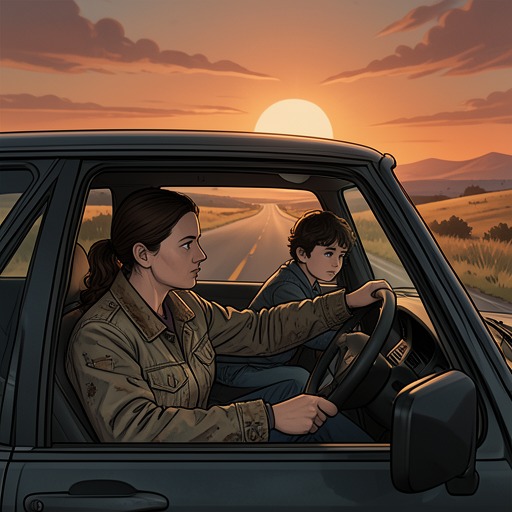
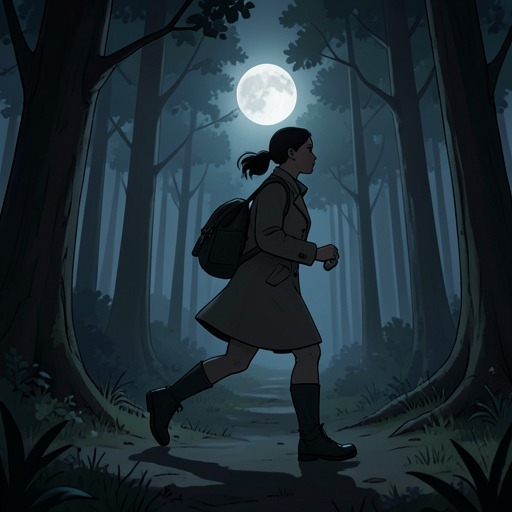
Jenny comes back to Wildmoor while fleeing with Pauline, retracing the route to the farmhouse late at night. The familiar chain still hangs between its posts, but Jenny finds that the small sign she painted has been replaced by a mass-produced PRIVATE sign. She drives past the house toward the stables, hoping to exchange the Bug for Dolly’s car. At about a quarter past four, she asks Dolly to sell it for three hundred dollars and explains that she needs to get home to her family in an emergency. Dolly doubts that the hour and the offer amount to an ordinary purchase, and points out that Jenny has arrived in another car.
Dolly’s first response is shaped by their history: she complains that Jenny left her projects in the lurch and says that, had Jenny spoken to her before leaving, they might have arranged the wages. As things stand, Dolly says, Jenny must forfeit them. Jenny insists she has not returned for her pay. The old dispute over wages therefore remains unresolved, even as the immediate need shifts to transport. Dolly hears Jenny’s request and receives the money. When she sees Pauline, she accepts Jenny’s hurried false introduction of her as an old friend named Ann from New Jersey, and does not pursue the unfamiliar suggestion that Jenny might be selling Pauline out. She gathers the bills into a squared pile and tells Jenny that she should be on her way.
Jenny reads Dolly’s silence as possibly deliberate, thinking that Dolly may be playing dumb because she fears the fugitives could kill her. Dolly’s exact motives remain uncertain; what is clear is that she does not expose the women or obstruct their departure. Jenny and Pauline leave in the car after struggling with jumper cables, with Jenny injuring a finger when the hood falls. Dolly’s last contribution is not a reconciliation or a payment of the wages she withheld, but a practical sale that enables their escape. Her final scene holds together the qualities that define her at Wildmoor: suspicion, economic self-interest, imperiousness, and a limited but consequential willingness to let Jenny go.